CREATIVITY
EXPERTISE
Big Ideas, Real Impact
Wander Safe
WanderSafe is a travel app designed for people with food allergies, providing fast, reliable allergy safe information worldwide. It offers ingredient breakdowns, verified places to eat and stay, and clear risk indicators, helping travelers make confident, informed decisions wherever they go.
Value Proposition
WanderSafe empowers travelers with food allergies to explore the world with confidence by delivering fast, trustworthy allergy safe information. Through ingredient transparency, allergy aware dining and hotel options, and clear risk indicators. WanderSafe reduces uncertainty, stress, and preventable allergic emergencies.
From my research I found that users with food allergies experience significant stress and uncertainty when traveling, largely due to a lack of clear, reliable information about safe dining options. Many rely on time-consuming research, inconsistent online reviews, or direct communication with restaurants, which can be overwhelming and still feel unreliable. This leads to increased anxiety, medical emergencies, limited food choices, and a reduced ability to fully enjoy travel experiences.
Janelle Profile Summary
Allergies: Severe chickpea allergy; food-pollen syndrome; anaphylaxis risk
Travel Style: High anxiety, highly precautionary
Meaghan Profile Summary
Allergies: Gluten (celiac)
Travel Style: “Wings it,” but often overwhelmed and becomes ill
Research
Interviews
Natasha Profile Summary
Allergies: Gluten + dairy intolerances
Travel Style: Research heavy but not high anxiety
Isabelle Profile Summary
Allergies: Severe nut allergies (anaphylaxis), soy sensitivity
Travel Style: Very cautious; avoids high risk regions, High anxiety
Interview Script & Answers
Sue Profile Summary
Allergies: Wheat, dairy, walnut (anaphylactic), multiple environmental triggers
Travel Style: High risk, High anxiety, avoids unfamiliar
Corrine Profile Summary
Allergies: Gluten (celiac)
Travel Style: Structured, planned, very cautious, anxious
Coping Strategies
People with food allergies rely on self developed coping strategies, such as carrying medication, extensive research, or bringing their own food to feel safe while traveling and in daily life
Research Overload & Information Gaps
People are forced to sift through multiple apps, websites, reviews, and phone calls just to verify basic safety information. Thus revealing a major lack of centralized, reliable, and clearly labeled allergy data.
Emotional Burden
Insights
People living with food allergies carry constant fear, anxiety, and a sense of social isolation because every new restaurant, destination, or group outing presents the risk of getting sick or not being understood, making it hard to fully relax or participate.
Desire for Inclusive, Allergy friendly Experiences
People want inclusive dining experiences where allergen information is clearly labeled and available. Yet the lack of standardized symbols and accessible data leaves them constantly compensating and planning ahead.
Travel Limitations
People with food allergies face significant travel limitations because safe accommodations, clear allergy friendly indicators, and trustworthy dining options are scarce. Forcing them to overprepare, limit destinations, and miss out on experiences others enjoy freely.
Safety & Trust in Food Environments
People feel safest when restaurants clearly demonstrate allergy awareness through transparent menus, knowledgeable staff, and consistent communication. Inconsistent practices and lack of reliable information prevent them from feeling fully secure.
Personas
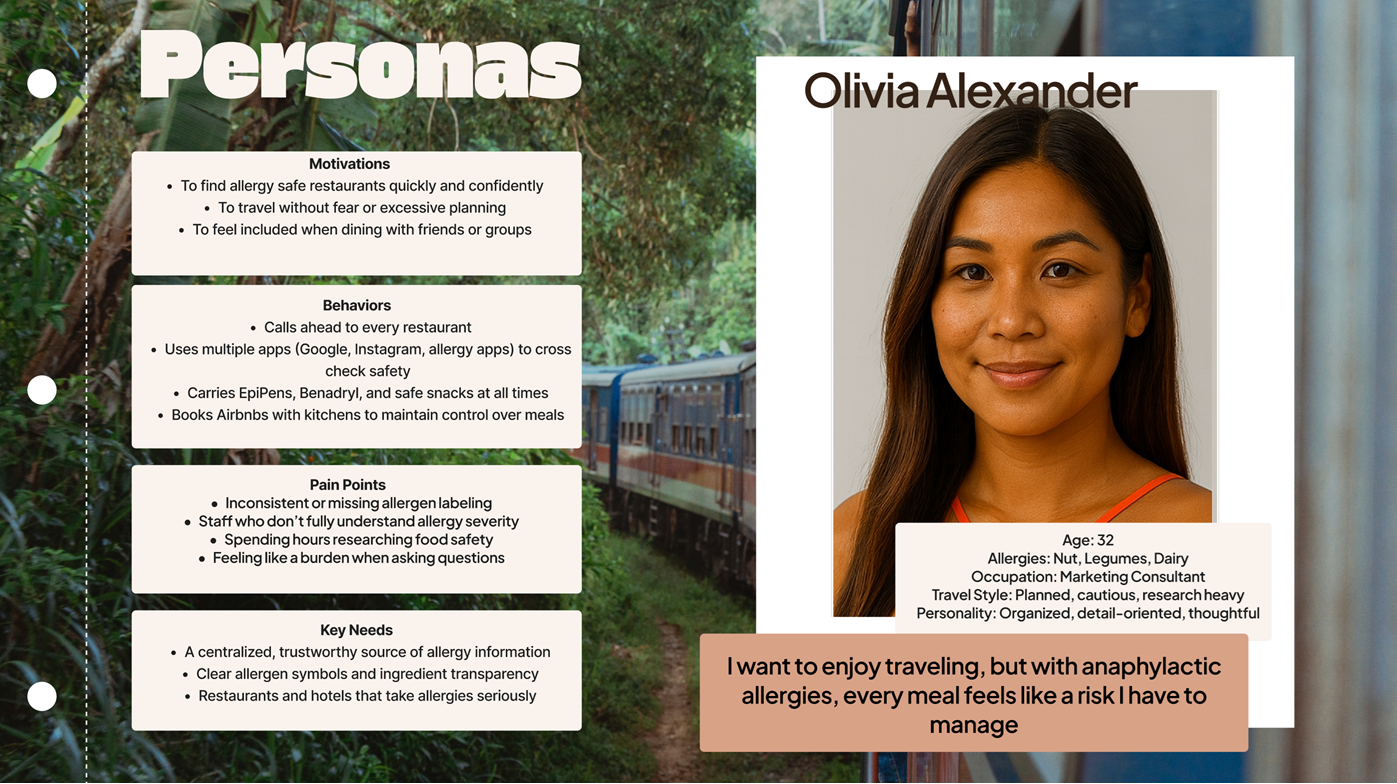
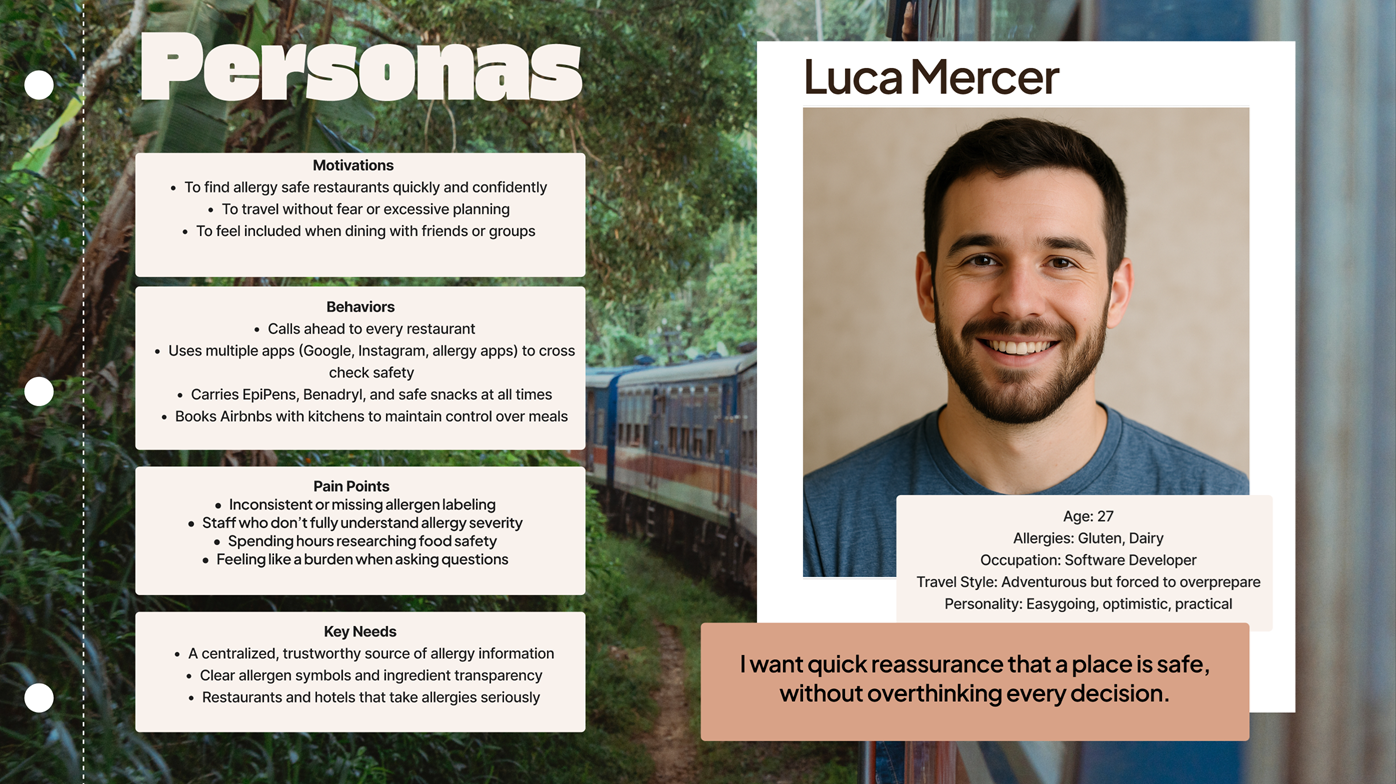
Based on these findings, I created two personas for whom I would tailor the design. For this specific project I chose to focus on Olivia’s persona.
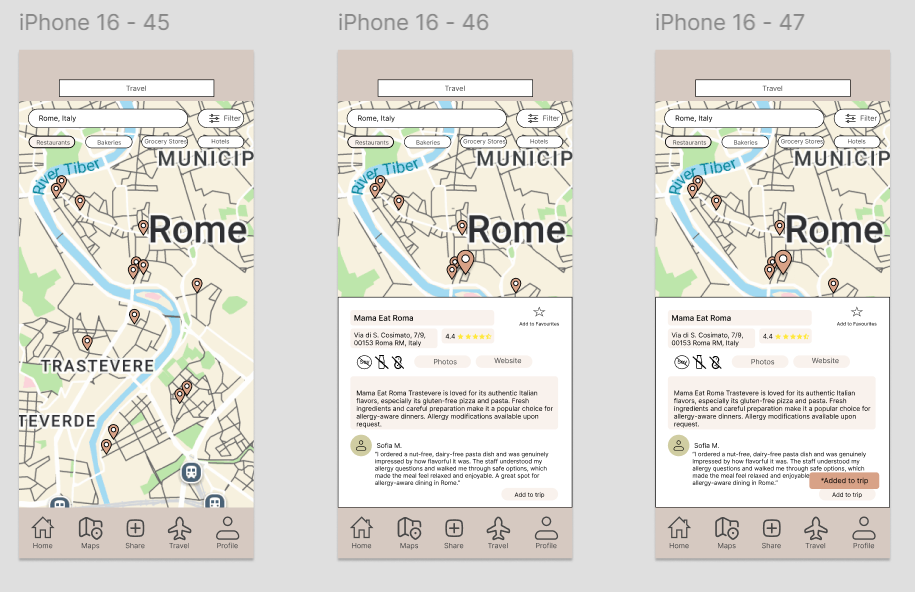
I created a flow diagram to illustrate how Olivia would use Wander Safe to find a restaurant based off of saved allergy information and add it to her trip itinerary. Key focus: reducing cognitive load and increasing trust in unfamiliar environments.
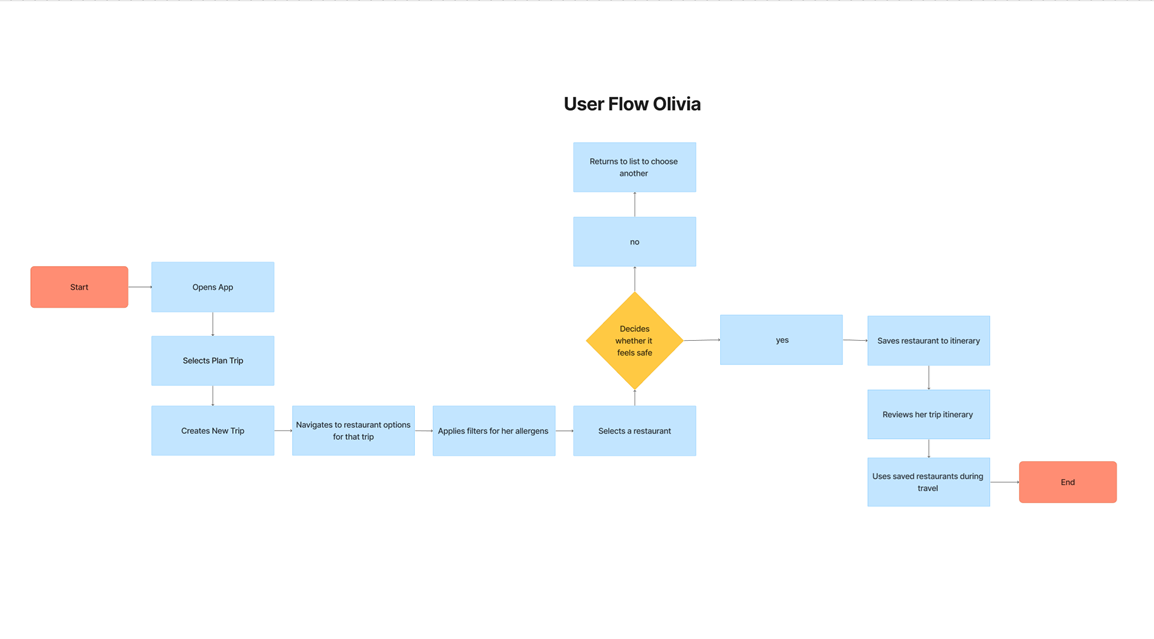
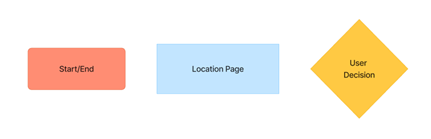
User Flow
Early Sketches & Wireframes
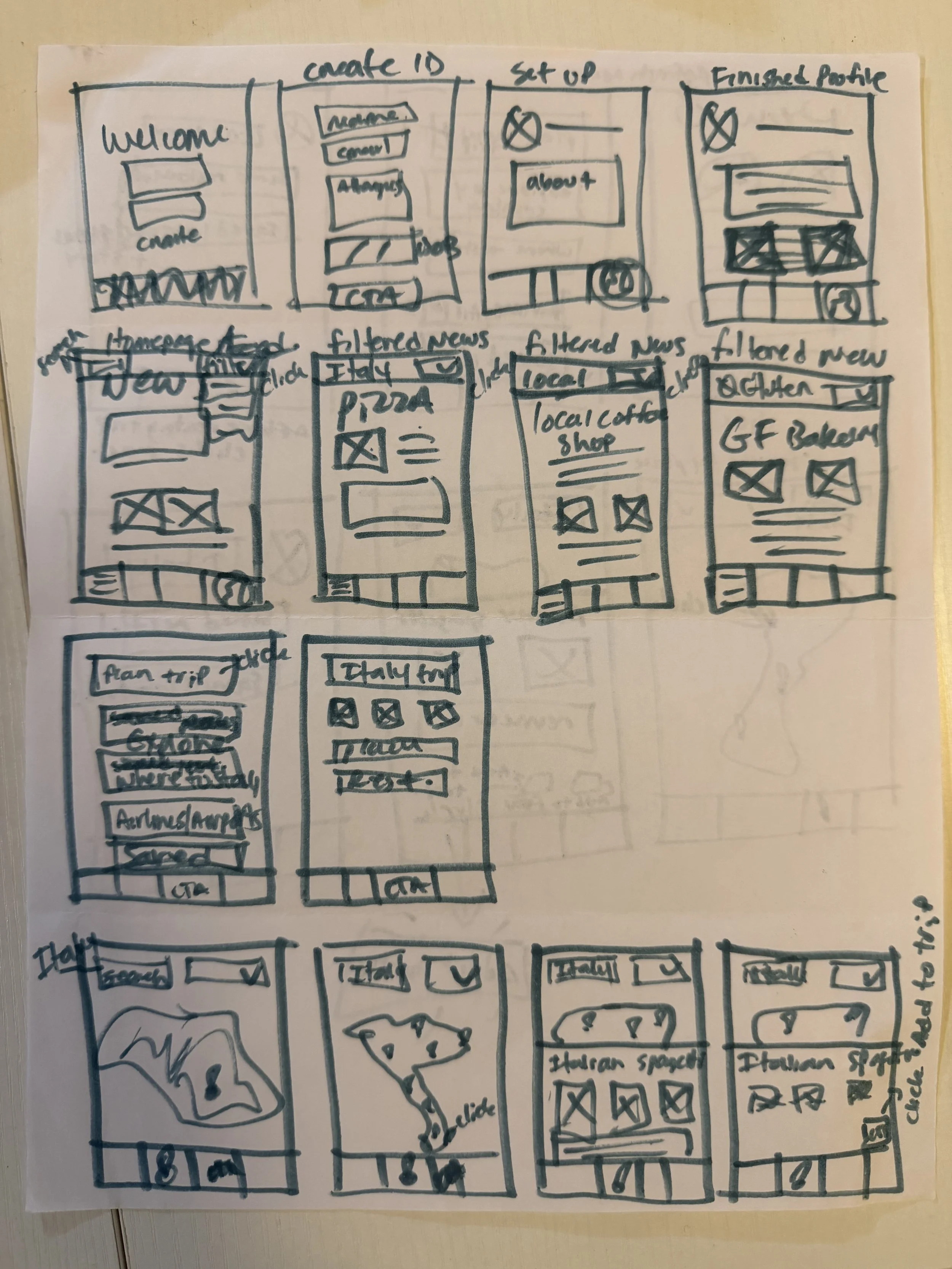
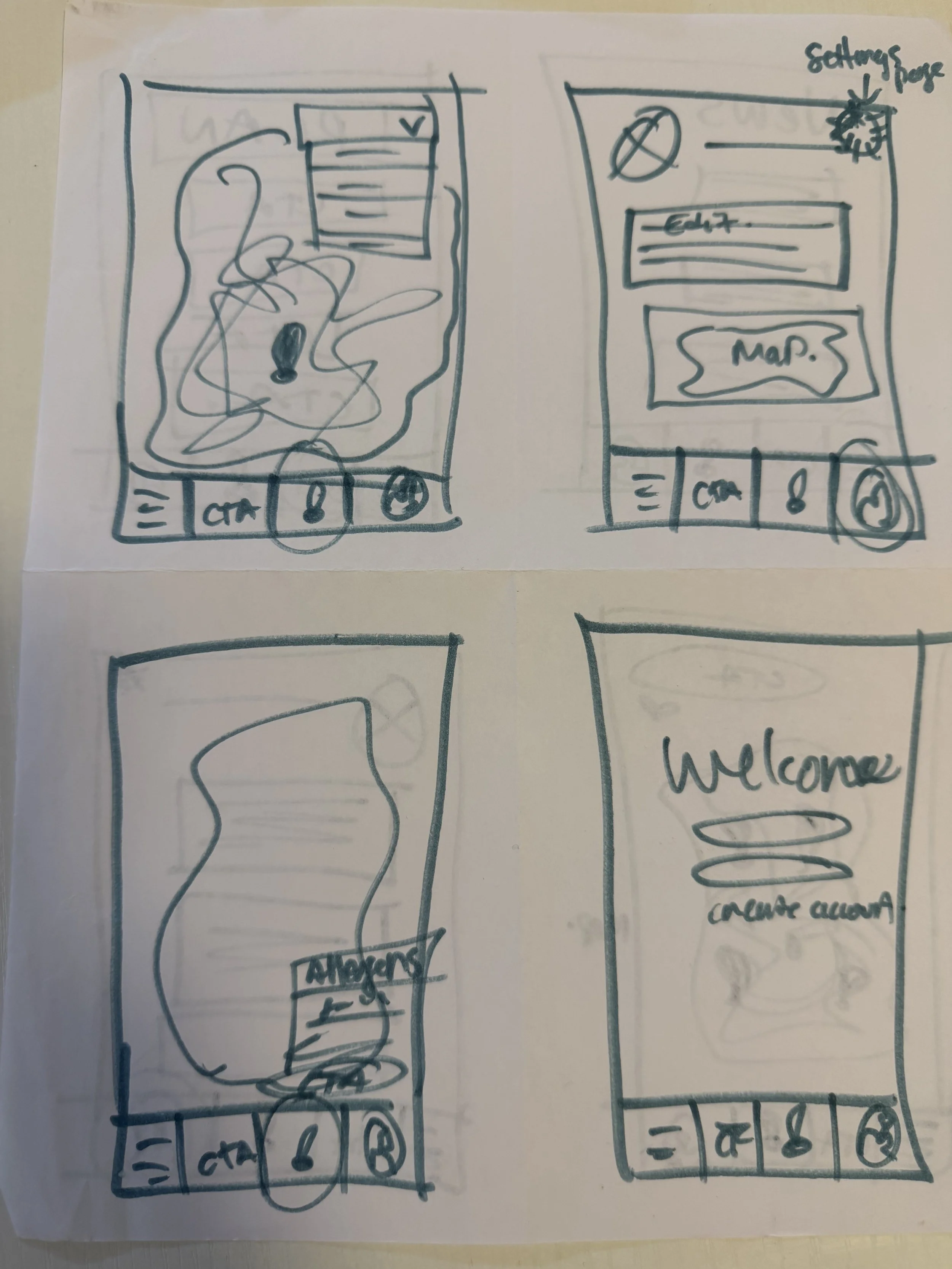
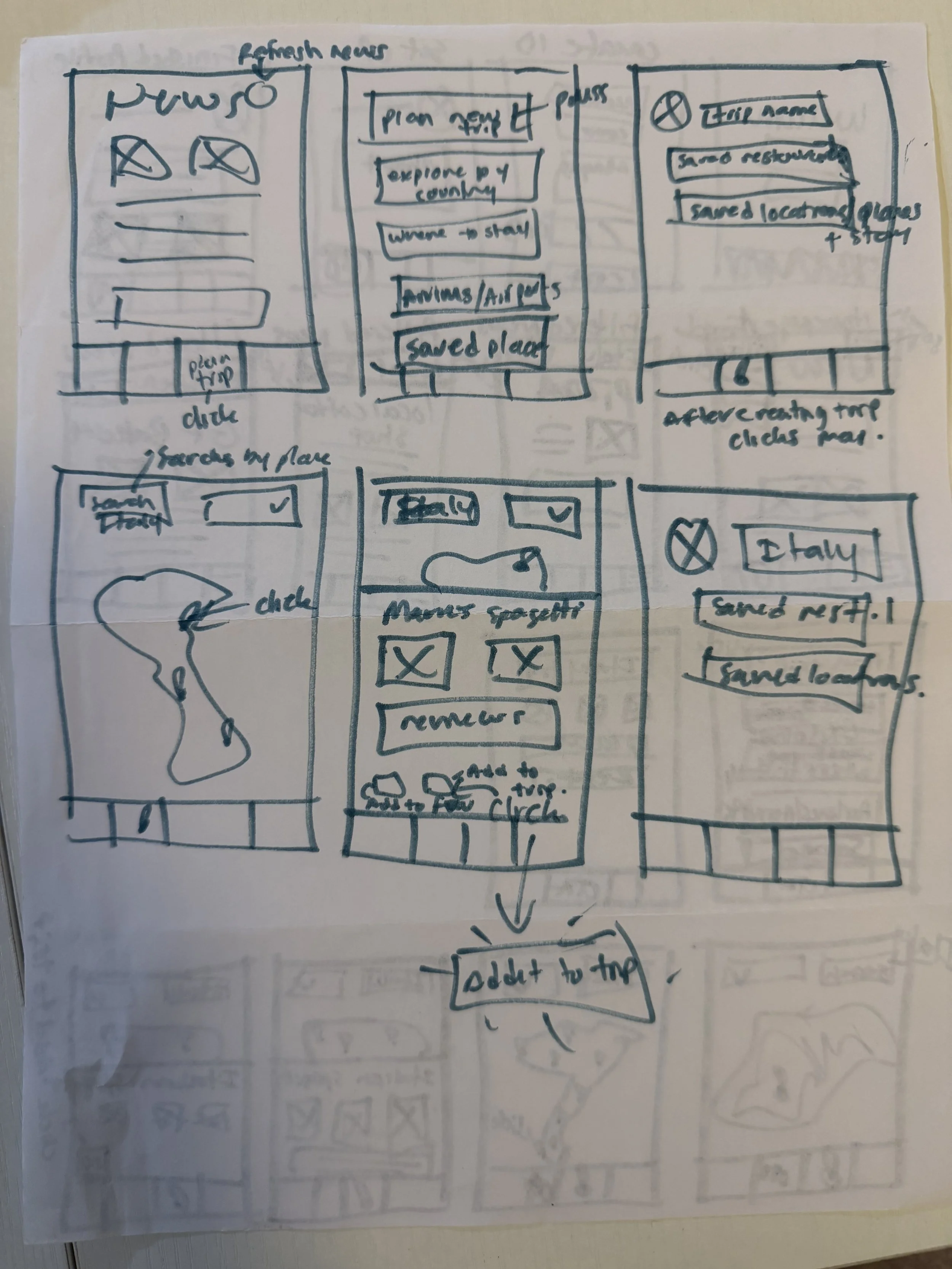
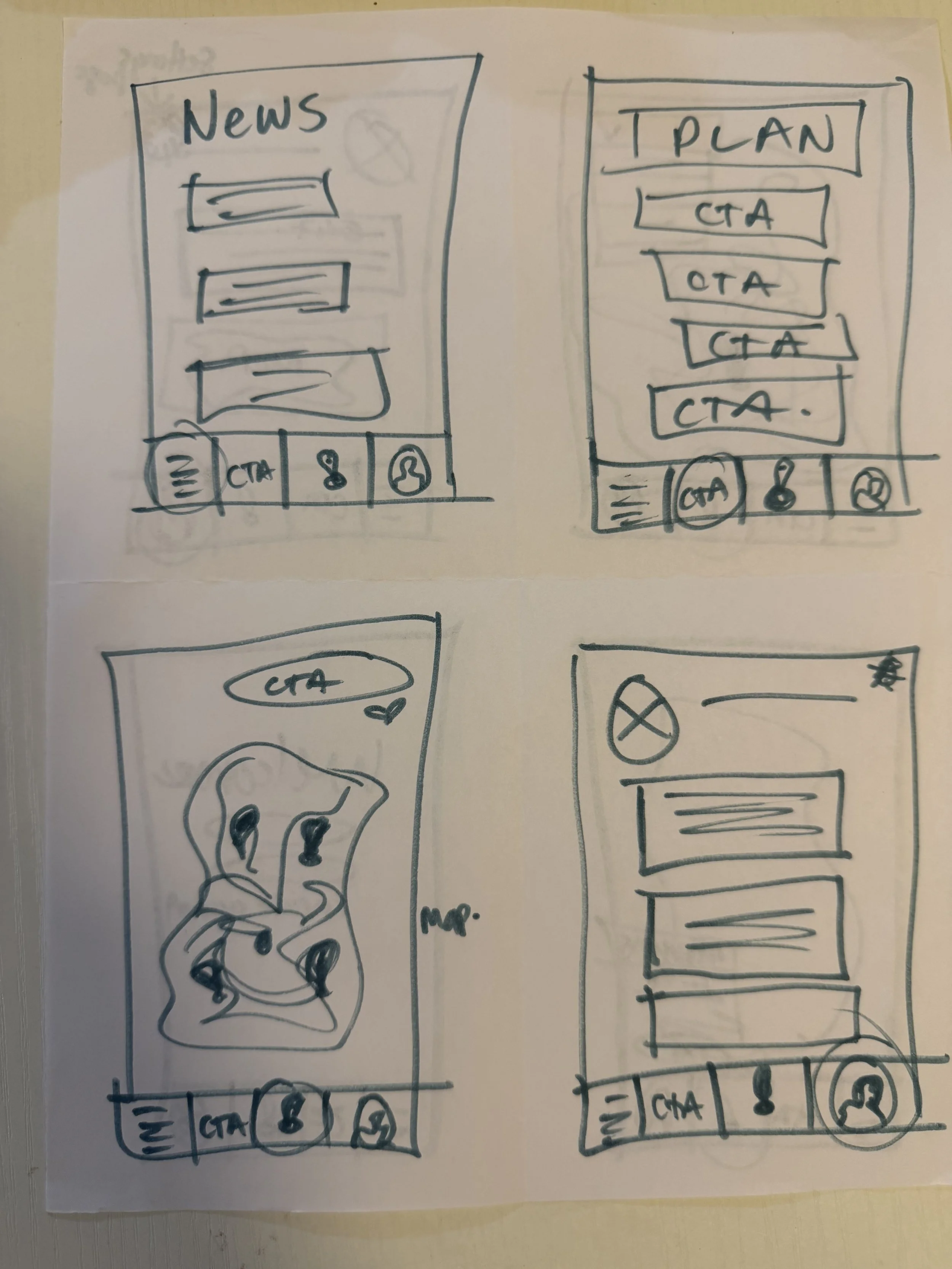
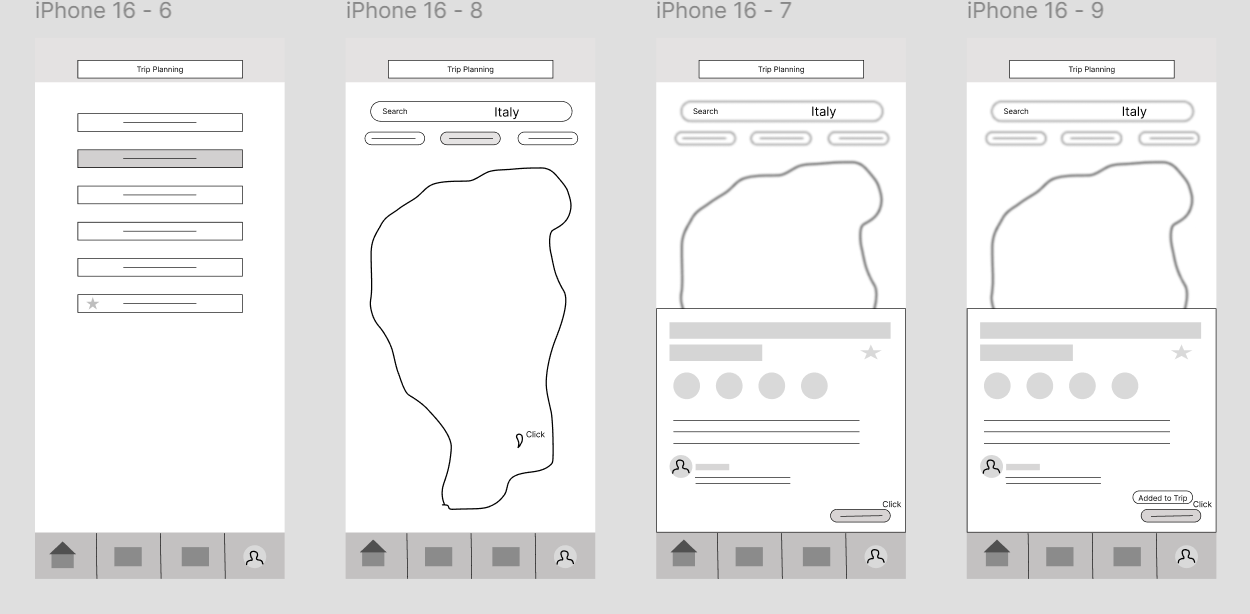
I used early sketches to rapidly explore different ideas and layout directions, allowing me to think through user flows and interactions without getting caught up in visual details. This helps identify the most effective approach before refining the design.
It was at this point through user feedback on sketches that an onboarding flow was needed to identify allergies that are later used in searches.
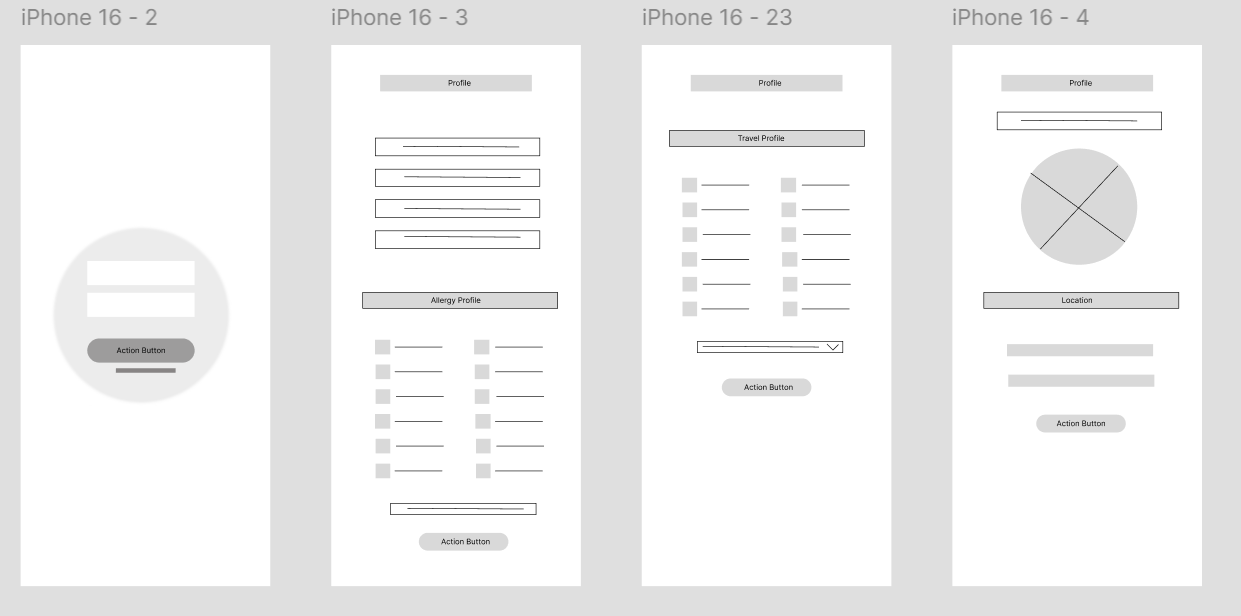
I developed wireframes to map out the structure and functionality of the experience, focusing on layout, content hierarchy, and user flow. This allowed me to refine key interactions and ensure clarity before moving into high-fidelity design.
User Testing
Testing
Testing was conducted with 3 participants virtually and at my home with my friends.
Participants were asked if it was clear on how to:
1. Create a personal account
2. Add their allergies to their profile
3. Search for a new restaurant
4. Add restaurant to a trip
Findings
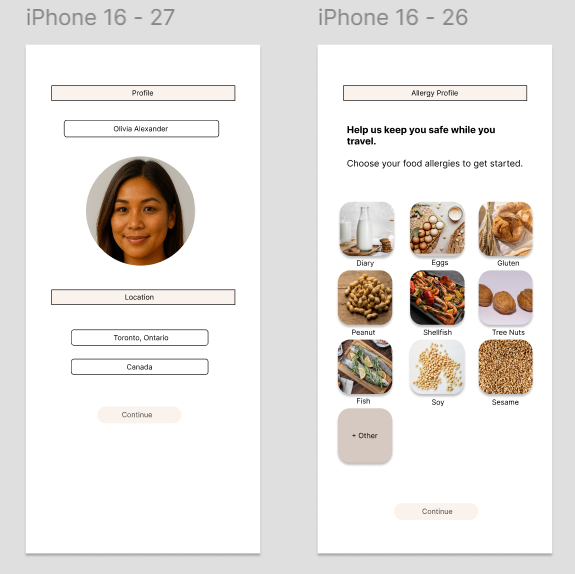
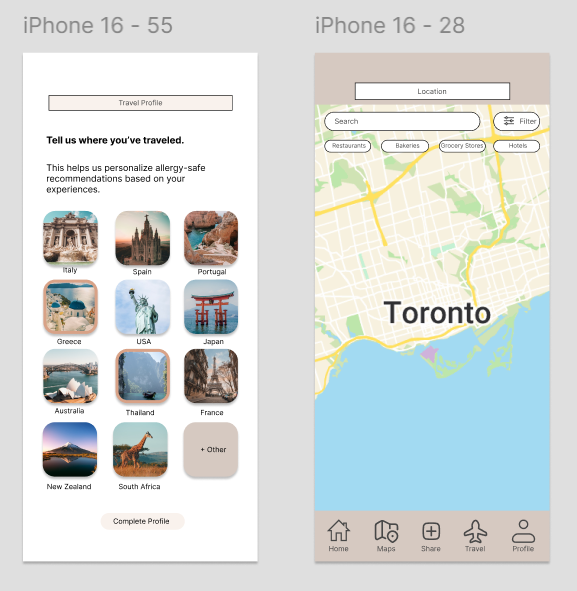
I noticed that participants had a little difficulty with the flow of the initial information. The flow was better received with profile set up first, with photo and personal information followed by allergies and travel locations.
The search function to find a restaurant was well received.
Please click the link below to view the working protype.
High-Fi Screens
Conclusion
WanderSafe demonstrates how thoughtful, user-centered design can simplify complex and high-stress decisions. Through this project, I focused on reducing uncertainty and building trust for users navigating food allergies while traveling. As I am continuing to develop this product, I will validate the solution through more user testing and expand features to further personalize and enhance safety. This project strengthened my ability to design with empathy, prioritize clarity, and create solutions grounded in real-world needs.
What I'd do differently
As I continue developing this project, I plan to expand my user research to include a more diverse and balanced group of participants. While I’ve gathered valuable insights, I have not yet been able to recruit male participants despite multiple outreach attempts, which may limit the range of perspectives captured. Including a broader set of users will help strengthen the findings and ensure the solution reflects a wider range of needs.
I also plan to incorporate usability testing earlier in the process to validate key decisions and refine the experience based on real user interaction. These steps will help improve the product’s inclusivity, effectiveness, and overall user confidence.
Key take aways
This project strengthens my approach to designing for real-world challenges, where users need clarity, trust, and efficiency. It highlights the impact of simplifying complex information and the importance of inclusive research and continuous iteration in building meaningful user experiences.
What’s next
As I continue developing WanderSafe, the next steps focus on validating the experience through usability testing and expanding features to better support personalized safety needs. This includes refining the recommendation system, improving allergen visibility, and enhancing trust through verified and community-driven insights. I also plan to continue refining the design to ensure it meets accessibility standards, making adjustments to improve readability, contrast, and overall usability for a wider range of users.